Commercial Waste Brompton: Recycling and Sustainability
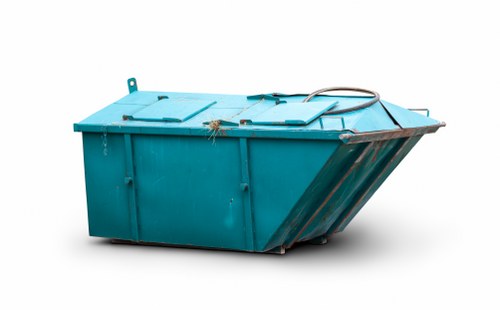 Commercial Waste Brompton is committed to creating an eco-friendly waste disposal area that supports local businesses, protects streets, and reduces environmental impact. Our approach to a sustainable rubbish area begins with clear, practical steps for separation, reuse and recovery. We combine strategic collection with partnerships across the borough and nearby transfer hubs to ensure materials are processed responsibly, and we prioritise reuse where possible.
Our sustainability commitment
We operate with a long-term vision: to turn the Brompton commercial recycling landscape from single-use disposal into a circular, resource-conscious system. Every client interaction is an opportunity to divert waste away from landfill and towards reuse, repair and high-quality recycling streams. We work within local borough recycling frameworks that emphasise source separation of food waste, glass, paper, mixed containers and textiles to improve material recovery rates.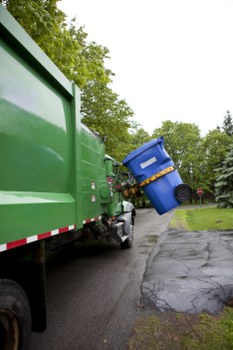
Recycling percentage target
We have set a bold recycling percentage target: to achieve a 70% recycling and recovery rate for all commercial collections in Brompton by 2030. This target reflects the ambition of a true sustainable rubbish area and aligns with wider urban goals for low-carbon waste systems. To reach it we target reductions in residual waste and improvements in dry mixed recycling and organic collection performance, tracking progress quarterly and reporting transparently to our partners.To support the target we use a layered infrastructure model that includes kerbside compatible solutions for shops and offices, dedicated communal bins for market areas, and optimised route planning for collections. We also integrate on-site segregation advice for businesses, recommending simple, high-impact measures such as separate bins for food waste, glass-only boxes, and textile collection sacks to match the borough's recommended streams.
Our network relies on local transfer stations and nearby processing hubs to keep transport distances short and maximise material recovery. We coordinate with transfer facilities in west and central London and with borough transfer hubs to ensure that paper, card, cardboard, metals, and organics are sent directly to the most appropriate processors. This reduces time to treatment and lowers the carbon footprint of each tonne moved.
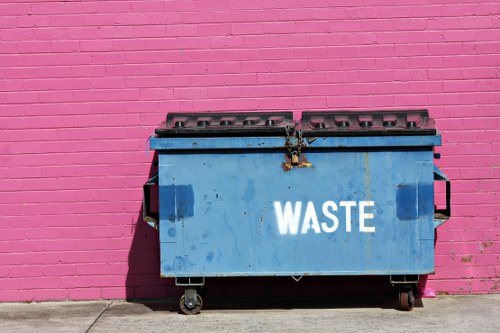 We run a suite of services tailored to Brompton's commercial landscape, including:
- Mixed recycling collections for shops, restaurants and office blocks
- Food waste and organic collections for hospitality and markets
- Secure confidential waste streams for professional services
- Bulky uplift and commercial skip management
- Textiles and small electrical items collected separately for reuse or refurbishment
We work closely with the Royal Borough's principles on waste separation, encouraging commercial clients to adopt the same colour-coded or labelled segregation systems used in local household schemes. This alignment makes it easier for businesses to sort right first time and ensures compatibility with municipal processing facilities. Our advisors provide training and clear signage to support consistent separation at source.
Partnerships are a core part of our sustainability model. We partner with local charities and social enterprises to divert reusable items into community benefit streams: furniture and fittings go to refurbishment partners, working electronics are redirected to re-use charities, and surplus textiles are channelled to local social projects. These collaborations help establish a vibrant reuse loop that keeps materials in productive use and supports local employment and charitable aims.
We maintain active relationships with social rehousing initiatives and reuse networks to make sure that high-quality office furniture, shelving and appliances find new homes rather than being processed as waste. By building strong charity partnerships we offer businesses the option to designate items for direct donation, enhancing the circular economy within Brompton and neighbouring boroughs.
Logistics play a decisive role in sustainability. Our fleet strategy focuses on low-carbon vans and efficient routing to cut emissions across the entire commercial waste service. We operate electric and hybrid vehicles where infrastructure allows, and use smaller, low-emission vehicles for pedestrianised and narrow-street collections common in Brompton's retail and heritage areas.
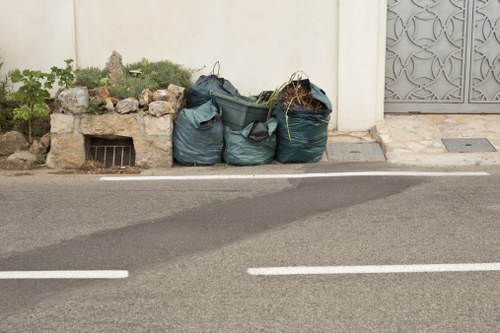 In addition to low-emission vans, we deploy cargo bikes and consolidated collection points to reduce congestion and noise. Route optimisation software matches vehicle capacity with collection density, reducing unnecessary mileage and enabling us to maintain a reliable service while lowering the carbon intensity of each collection. This combination supports the creation of a true sustainable rubbish area that is also practical for everyday business needs.
 Our reporting and continuous improvement framework tracks recycling rates, diversion from landfill, vehicle emissions and charity re-use volumes. We publish aggregated performance metrics and work with clients to set reduction targets, introduce reuse-first procurement recommendations, and pilot innovations such as on-site compactors, food waste digesters and shared communal recycling hubs. Together, these steps make Brompton commercial recycling more efficient, more circular and demonstrably greener for the whole community.
